Granular Artwork & Metadata Control: A Feature Request
Introduction
This article delves into a proposed feature enhancement focused on providing users with more granular control over artwork and metadata ordering within ROM management applications. Currently, configurations for media asset downloads and artwork metadata source priority are often implemented as global settings. This article will explore the limitations of this approach and advocate for a more flexible, game-specific customization system. This improvement would allow users to fine-tune their media experience, ensuring higher quality and more relevant artwork and metadata for each game in their library. The core of the discussion revolves around empowering users to curate their ROM collections with greater precision, addressing the variability in media asset quality across different sources. By implementing granular control, users can optimize their experience, ensuring that their ROM library is visually appealing and accurately represented.
The Current Limitations: A One-Size-Fits-All Approach
Currently, ROM management applications typically offer global settings for downloaded media assets (configured at scan.media) and artwork metadata source priority (configured at scan.priority.artwork in the config.yml file). The problem is that these settings apply universally across all games in the library. This all-or-nothing approach, while convenient for initial setup, falls short when dealing with the diverse landscape of game metadata and artwork quality. Different metadata sources excel in specific areas, and a single priority list may not always yield the best results for every game. For instance, one source might have superior box art for a particular console, while another offers more accurate release dates or developer information. Similarly, media asset quality can vary significantly between sources, with some providing high-resolution images and others offering lower-quality scans.
This limitation becomes particularly apparent when dealing with a large ROM collection spanning multiple platforms and regions. What works well for one game or system might be completely unsuitable for another. Users are often forced to compromise, either accepting suboptimal artwork or manually adjusting settings for individual games, a process that can be incredibly time-consuming and tedious. The lack of granular control hinders the ability to curate a truly personalized and high-quality ROM library. Therefore, there is a need to give users the ability to customize artwork and metadata settings on a per-game basis.
The Proposed Solution: Granular Control at the Game Level
The proposed solution involves implementing a system that allows users to granularly choose artwork metadata source priority and downloaded media assets for each individual game in their library. The vision is to integrate additional dropdown menus within the game's Edit menu. One dropdown would list the available media asset types, each with a checkbox to enable or disable it. This would allow users to select specific asset types (e.g., box art, screenshots, title screens) for download on a per-game basis. The second dropdown would present a reorderable list of artwork metadata sources, enabling users to define the priority order for each game individually. This feature would give users a huge level of control over the appearance and information associated with each game.
Imagine the user experience: upon selecting a game, navigating to the Edit menu would reveal these new dropdowns. The user could then, for instance, prioritize a specific metadata source known for its high-quality box art for that particular game, while also selecting specific media assets like screenshots and gameplay videos. This level of customization ensures that the user receives the best possible artwork and metadata for each title, tailored to their specific preferences. The implementation of this solution would significantly enhance the user's ability to curate their ROM collection, resulting in a more visually appealing and informative experience. By allowing individual game customization, the proposed feature addresses the limitations of the current global settings approach.
Real-World Examples: Why Granularity Matters
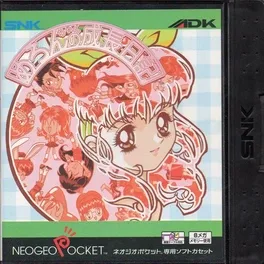
To illustrate the importance of granular control, let's consider the example of the Neo Geo Pocket game "Melon Chan's Growth Diary." Using default settings with 2D Box Art and IGDB as the top priority metadata source for artwork, the user might encounter a lower-quality image, such as the one found at https://images.igdb.com/igdb/image/upload/t_cover_big/vto0jvnomlle8mgruvjq.webp. This image, while functional, may not be the most visually appealing representation of the game.
However, by having the ability to prioritize other metadata providers, the user could access significantly higher-quality artwork. Consider the alternatives from sources like:
- Screenscraper.fr: https://www.screenscraper.fr/image.php?plateformid=25&gameid=47058&media=box-2D&hd=0®ion=jp&num=&version=&maxwidth=338&maxheight=190
- Launchbox-app.com: https://images.launchbox-app.com//64f356ef-7765-4cfa-972b-1ce47a691ba0.png
- Hasheous.org: https://hasheous.org/api/v1/images/CE4BDCD5E6999520D0B956B11A37283BA305094F
These alternative sources often provide superior box art, offering a more visually pleasing and accurate representation of the game. This example underscores the value of granular control. By allowing users to prioritize specific sources for individual games, the proposed feature ensures that the best possible artwork is displayed, enhancing the overall user experience. This kind of attention to detail makes a huge difference when curating a digital game library.
Alternatives Considered and Their Limitations
While the need for granular control is evident, it's important to acknowledge the existing alternatives and their shortcomings. Currently, users can manually adjust settings, but this often involves an enormous time investment. Manually overriding metadata and artwork for each game is a tedious and impractical solution, especially for large ROM collections. This approach is not only time-consuming but also prone to errors, as users may inadvertently introduce inconsistencies or overlook games. The lack of a streamlined, in-app solution necessitates a more efficient and user-friendly approach.
Another potential workaround involves creating custom configuration files or scripts to manage metadata and artwork settings. However, this approach requires advanced technical knowledge and is not accessible to the average user. It also adds complexity to the ROM management workflow, making it less intuitive and more prone to errors. The proposed granular control feature offers a simpler and more accessible solution that can benefit all users, regardless of their technical expertise. By integrating these settings directly into the game's Edit menu, the feature streamlines the process of customizing artwork and metadata, making it more efficient and user-friendly.
Conclusion: Empowering Users Through Granular Control
In conclusion, the ability to granularly choose artwork metadata source priority and downloaded media assets for each game represents a significant enhancement to ROM management applications. By moving away from a one-size-fits-all approach and empowering users with fine-grained control, the proposed feature addresses a critical limitation in current systems. The benefits are clear: improved artwork quality, more accurate metadata, and a more personalized user experience. The integration of additional dropdown menus within the game's Edit menu, as envisioned in this proposal, offers a user-friendly and efficient solution. This feature would not only streamline the process of curating a ROM collection but also ensure that each game is presented in the best possible light.
The example of "Melon Chan's Growth Diary" clearly illustrates the practical benefits of granular control, demonstrating how prioritizing different metadata sources can lead to significantly better artwork. While manual workarounds exist, they are time-consuming and impractical for large collections. The proposed feature offers a superior alternative, making it easier for users to achieve their desired level of customization. By implementing granular control over artwork and metadata, ROM management applications can truly empower users to curate their digital game libraries with precision and care.
For more information on metadata management and ROM organization, consider visiting resources like the MobyGames website.